golden generations
How golden generations end
Win a World Cup and the next one tends to end early: four of the last five defending champions went out in the group stage. It is not a curse, it is a clock, and the two teams that beat it, France and Argentina, show exactly how it works.
22 July 2026 · 9 min read · James Frewin
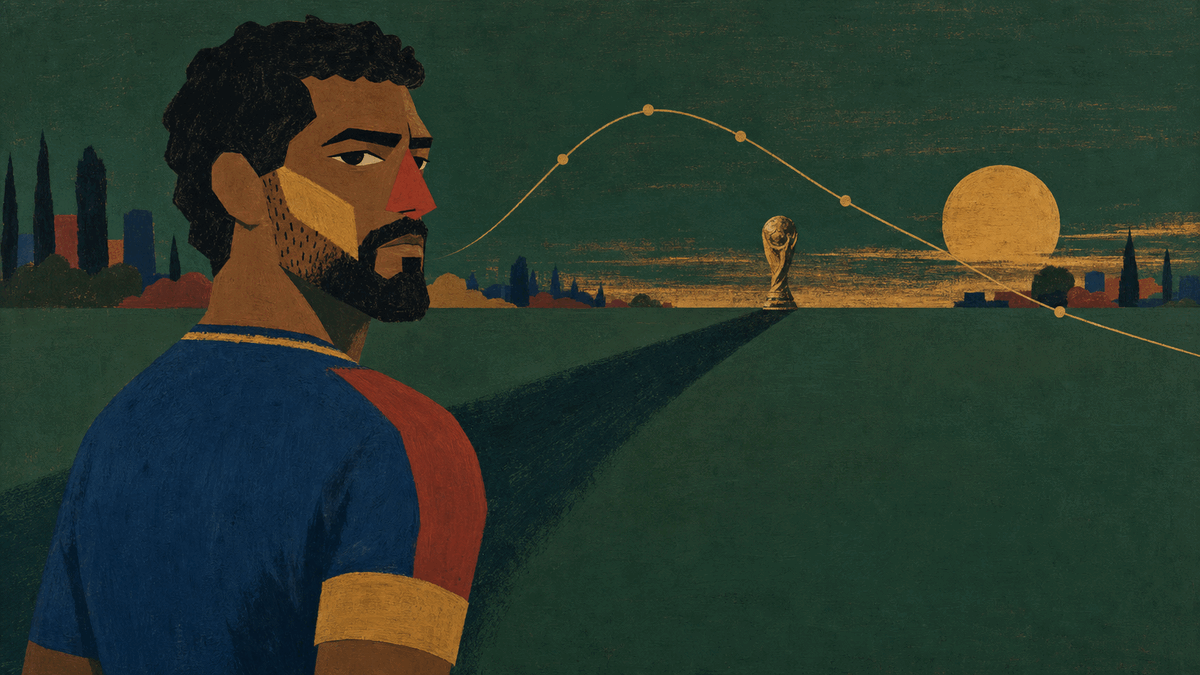
Spain have just won a World Cup with a midfield the internet spent a week calling the best ever. It is worth remembering what usually happens next, because football keeps writing the same ending and we keep being surprised by it. A great side wins the thing it was built to win, and then, faster than anyone expects, it is gone.
Four champions, four group stages
Start with the bleakest version of the pattern. Look at how the defending champion fared at the following World Cup, and a run leaps out: four of the last five holders went out in the group stage. France in 2002 did not score a goal. Italy went out bottom of their group in 2010. Spain, world and European champions, were gone after two games in 2014. Germany finished last in their group in 2018. Only Brazil, in 2006, cleared the first round, and they went out in the quarters.
out in the group stagereached the finalEach row is a World Cup winner and how it fared at the next tournament. Four of the last five holders fell in the group stage. The two that did not, France in 2022 and Argentina in 2026, are the exceptions this piece is about.
That is not a run of bad luck falling on unrelated teams. It is the same event happening to the same kind of team: a great one, one tournament too late.
It is a clock, not a curse
The mechanism is boring and physical. Football research puts the average player’s peak between 25 and 27: forwards and central midfielders around 25, defenders a little later. After 30, the measurable things fall away, sprint distance, high-intensity actions, the accelerations that win a duel, even as passing accuracy holds up or improves. Technique is the last thing to go, which is exactly why an ageing great team still looks the part and stops getting results.
Now line that up against how old champions actually are. Germany won 2014 at an average of about 27.6. Spain’s 2014 squad was somewhere between 26.7 and 28 depending on how you count, and either way past the peak. Argentina won 2022 at around 28.0. A squad built around 27-year-olds is, on the research, already over the top the day it lifts the trophy. Give it four more years and the core is 31, the legs are the first thing the opponent notices, and the group stage does the rest.
A golden generation is not ended by complacency or a bad draw. It is ended by birthdays, arriving all at once.
The exception that proves it: win young
France are the tell. They won 2018 with the youngest squad of any champion in years, about 26.0, and instead of collapsing they walked back into the final in 2022, losing to Argentina only on penalties, and did it despite losing Pogba, Kanté and Benzema to injury. They did not dodge the clock. They started it later. Win at 26 and your core is 30 at the next World Cup, still inside the window. Win at 28 and it is 32, and 32 is where the graph falls off a cliff.
The other exception: ride a genius
Argentina are the stranger case, and the reason the title of this piece hedges. They won 2022 old, and by the ageing rules should have gone out early in 2026. Instead they reached the final again, losing 1–0 to Spain in extra time. The explanation is one man. A team can outrun the clock for a while if it is built around a player good enough to decide games on technique alone, and Lionel Messi, 39 in that final, was still that player for one more month. But that is a delay, not a defiance. The genius retires and the cliff is still there, only steeper, because the rebuild was deferred rather than started. Argentina’s reckoning is not cancelled. It is scheduled.
So which one is Spain?
Which brings it back to the champions of 2026. The honest answer is that it depends entirely on the ages on the teamsheet, not on the quality, which nobody doubts. If Spain won this with a core in its early-to-mid twenties, they are France 2018, and the next cycle is theirs to lose. If they won it with a group already the wrong side of 28, they are Spain 2010 again, and the machine that keeps producing midfielders will have to do its job all over again. The pipeline is the insurance policy. It is the one thing that lets a country treat the end of a golden generation as a handover rather than a fall.