the bracket
Simulating your cup run: how hard is the draw?
Every cup draw starts the same argument: did we get lucky? Simulating the routes settles it. How a bracket becomes a probability, and why even the kindest draw is longer odds than it feels.
21 July 2026 · 6 min read · James Frewin

The balls come out of the bowl and every group chat splits into two parties: the “we’re winning this whole thing” caucus and the “typical, hardest draw in the competition” opposition. Both are guessing. The draw’s difficulty is not a feeling, it is a multiplication, and it can be settled to a number before the arguing finishes.
A cup run is a chain
A league season forgives; drop points in August and the maths barely notices. A cup forgives nothing: to reach the final you must win every round, and probabilities that must all come true are multiplied, not averaged. That single fact does all the damage. Win each of four rounds 70% of the time, comfortable favourite every round, and the chain comes to 0.7 × 0.7 × 0.7 × 0.7, about 24%. Nothing about any single afternoon was risky; everything about needing four of them together was.
The kind draw
32% reach the final
The brutal draw
5% reach the final
This is why the same club can be right to fancy every tie and wrong to book the hotel. Multiplication is quietly merciless, and intuition, which averages instead, is systematically too sunny about chains.
So did you get a lucky draw?
Now the question the bowl actually poses. Take the kind route and the brutal route in the figure above: the difference between them is a factor of six, from a 5% run to a 32% one. So yes, the draw genuinely matters, more than a month of form does, and celebrating a soft one is entirely rational. What the sum takes away is the second half of the celebration: the kind draw still fails two times in three. A good draw buys a better ticket, not the prize.
The draw can double your chance of the final and still leave you probably not going. Both halves of that sentence are true, and the chat only ever quotes one.
Why the honest answer needs a simulation
The multiplication above cheats once: it pretends you know your opponents. You do not. Round three’s opponent depends on round two’s other ties, and cups that re-draw each round randomise the route again every few weeks. The clean way through is the one used for everything else on this site: play the whole bracket out thousands of times, every tie a weighted coin, every future draw drawn afresh, and count. Hard routes and soft routes then appear in exact proportion to their likelihood, and “how hard is our draw?” gets its real answer: a distribution of routes, summarised as one honest percentage.
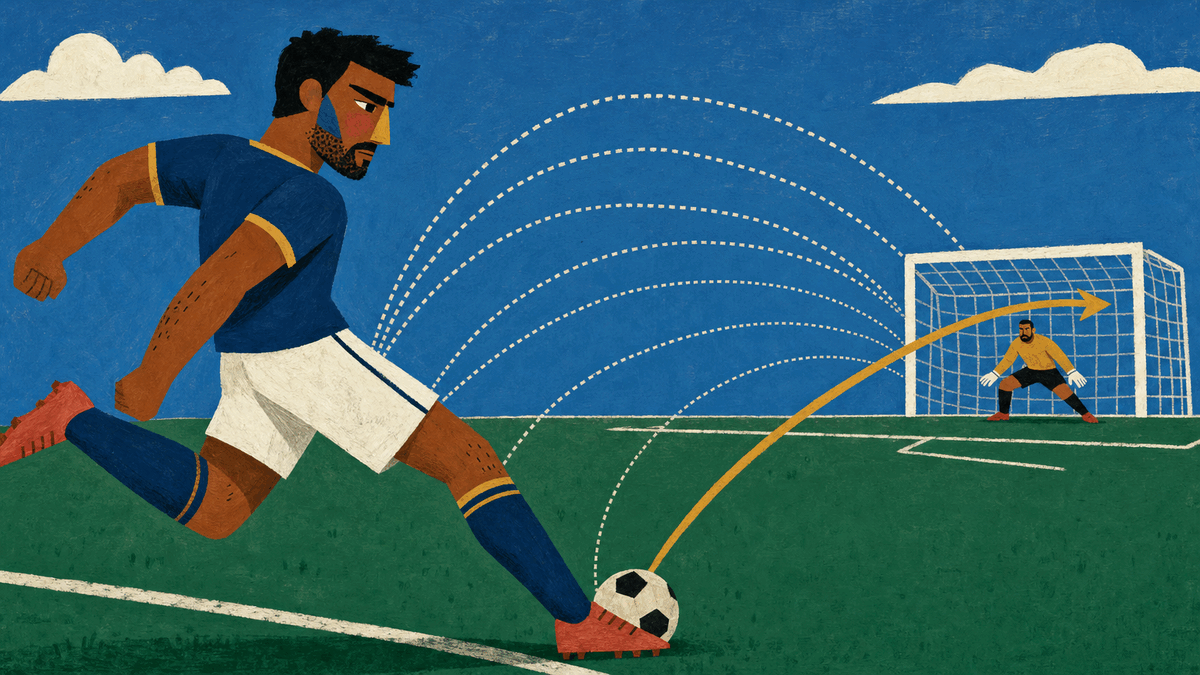
Run that way, cup football’s favourite lie also dissolves on its own. Even the strongest team in the field, favoured in every conceivable tie, usually lands short of a coin flip for the trophy. The bookmakers’ favourite is simply the least unlikely name, which is a humbler title than the odds boards make it sound, and the same humility extra time and penalties enforce on any single tie.
Bring it to the next draw
The next time the balls come out, you need three numbers: a rough win chance per round, the number of rounds, and the courage to multiply. That is enough to beat both parties in the chat, the dreamers and the doomers, because both are arguing about a feeling. And when the competition reaches this site, the fixture pages will carry the full version, live win probabilities and all, ready to pin on match day.