extra time
Extra time is a coin flip we pretend to understand
Thirty more minutes, then penalties. The further a knockout runs, the more it becomes noise. Here is what the model can and cannot tell you once it is level at 90.
13 July 2026 · 5 min read · James Frewin
For 90 minutes a knockout is a contest. Two teams, a plan each, a scoreline that mostly reflects who played better. Then, if it is level, the game keeps going and quietly stops being that. Extra time is a tired, cautious version of the same match. A shootout is something else again. The further a final runs past 90, the less it is a test of the better side and the more it is a test of luck, and a model that is honest with you should say so out loud.
What the model does after 90 minutes
The engine behind the Spain v Argentina final plays the tie out in three phases. Regulation runs at the teams’ full expected-goal rates. If it is still level at the whistle, extra time is simulated at about a third of normal scoring rates, tilted a little toward whoever has the fresher legs. Thirty minutes of exhausted, risk-averse football simply does not produce goals at the same clip as a slice of the first half, so the model treats it as a lower-scoring, higher-variance continuation, not a new game.
Add it up across 100,000 runs and the shape of the endgame is clear. The final has about a 29% chance of reaching extra time and about a 16% chance of reaching penalties. So roughly one final in three is still open at 90, and about one in six is decided from the spot. The other two-thirds are settled where the model has the most to say, and the least to apologise for.
A shootout is close to a coin flip
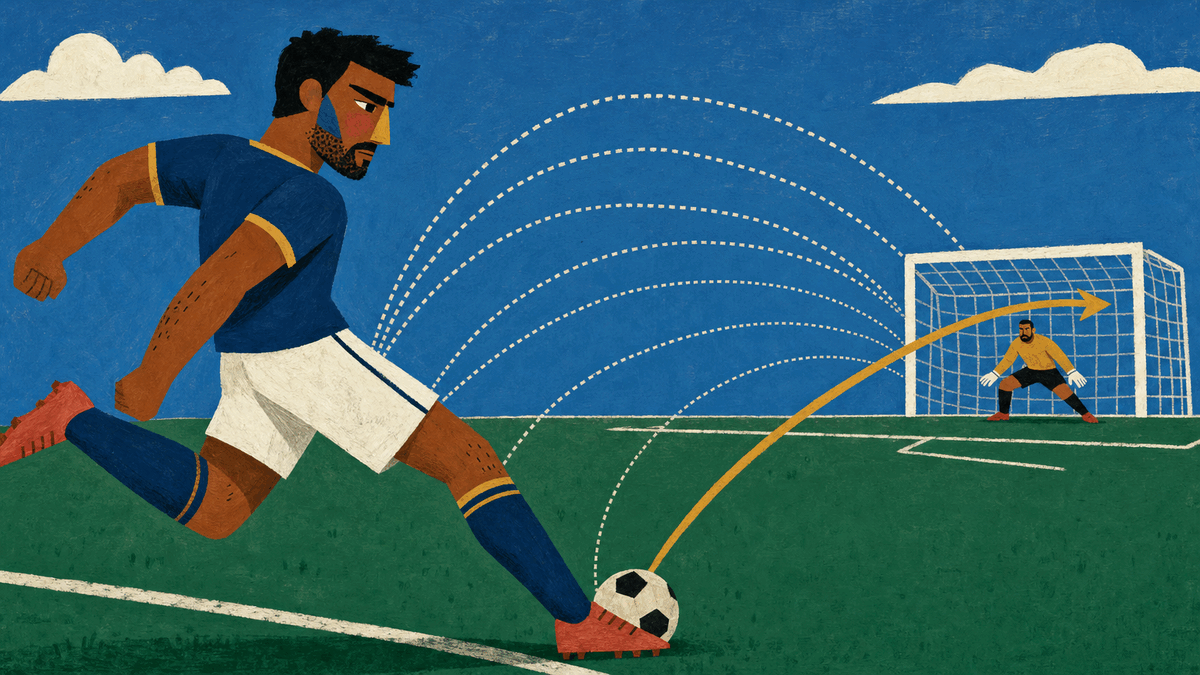
The last phase is the one everyone remembers and the one the model trusts least. It rates the final’s shootout roughly 56/44 to Argentina, an edge pedigree only nudges. Almost all of that four points is Emiliano Martínez and the simple fact that this Argentina has won a shootout at a World Cup before. Strip the pedigree out and it is 50/50, a coin. Put it back and the coin lands their way a little more than half the time. That is the honest ceiling on what preparation, nerve and a great goalkeeper are worth once it comes to spot-kicks.
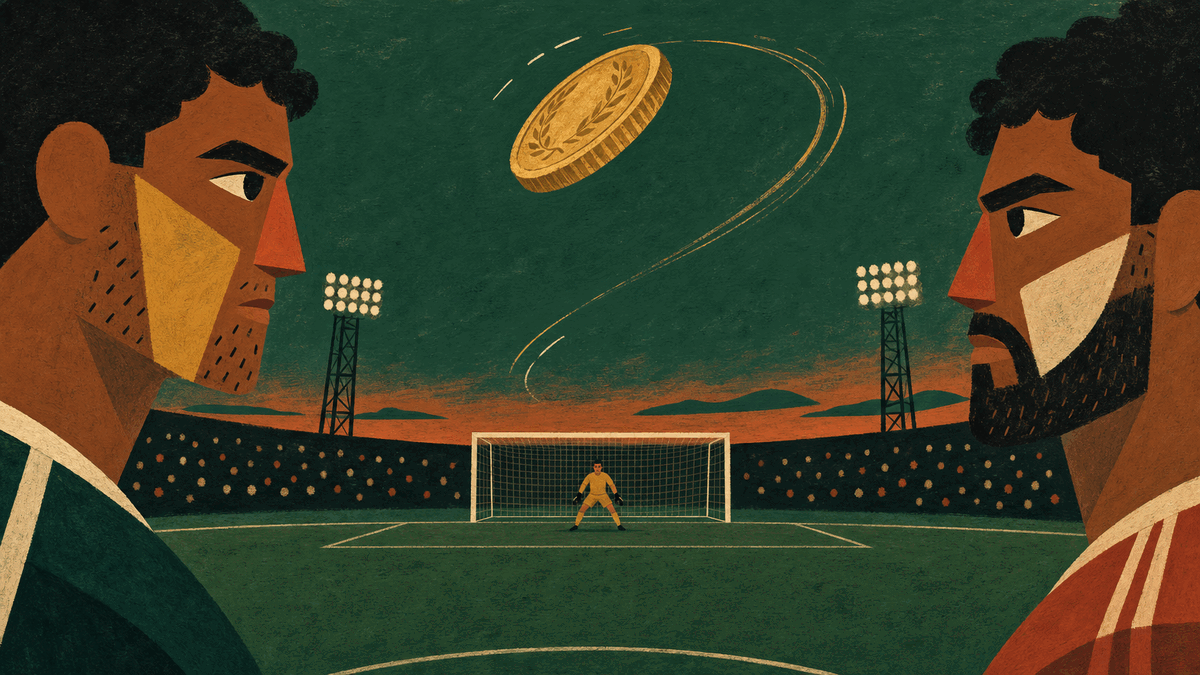
The problem with a coin is that a short run of flips tells you almost nothing. Ten shootouts can read 7–3 on luck alone and feel like a law of the universe. Run it a thousand times and the number stops shouting. Try it.
Press the button. The running number is Argentina's share of shootouts won so far.
Why the hedge widens as the clock runs
This is why the model does not hand you a single confident number and walk off. It keeps three phases in view, and each one is noisier than the last. A team can earn its way to a regulation win. It can half-earn an extra-time one. It cannot earn a shootout, only survive it. So the deeper the tie runs, the wider the honest hedge, because there is genuinely less to know.
Regulation is a contest. Extra time is a tired version of it. A shootout is a coin the better team gets to weight, slightly.
How to read the late drama
None of this makes the endgame less thrilling to watch. It makes it easier to read afterwards. When a final is won on a 123rd-minute header or the fifth penalty, the temptation is to narrate it as destiny, as if the team that held its nerve was always going to. Mostly it is not. Late drama is mostly variance, not destiny, and the same match replayed a hundred times hands the trophy the other way often enough to keep anyone humble. The winners deserve the medal. They do not always deserve the story.
Run the endgame yourself
Push the final to extra time and penalties, and watch the hedge widen.