the safety net
The two Euro 2028 hosts who cannot miss
All four host nations have to qualify for their own tournament, and only two places are held back to catch the ones who fail. Run it 100,000 times and the same thing happens every time: two of the four are already safe, and it is not the two you would guess.
27 July 2026 · 8 min read · James Frewin
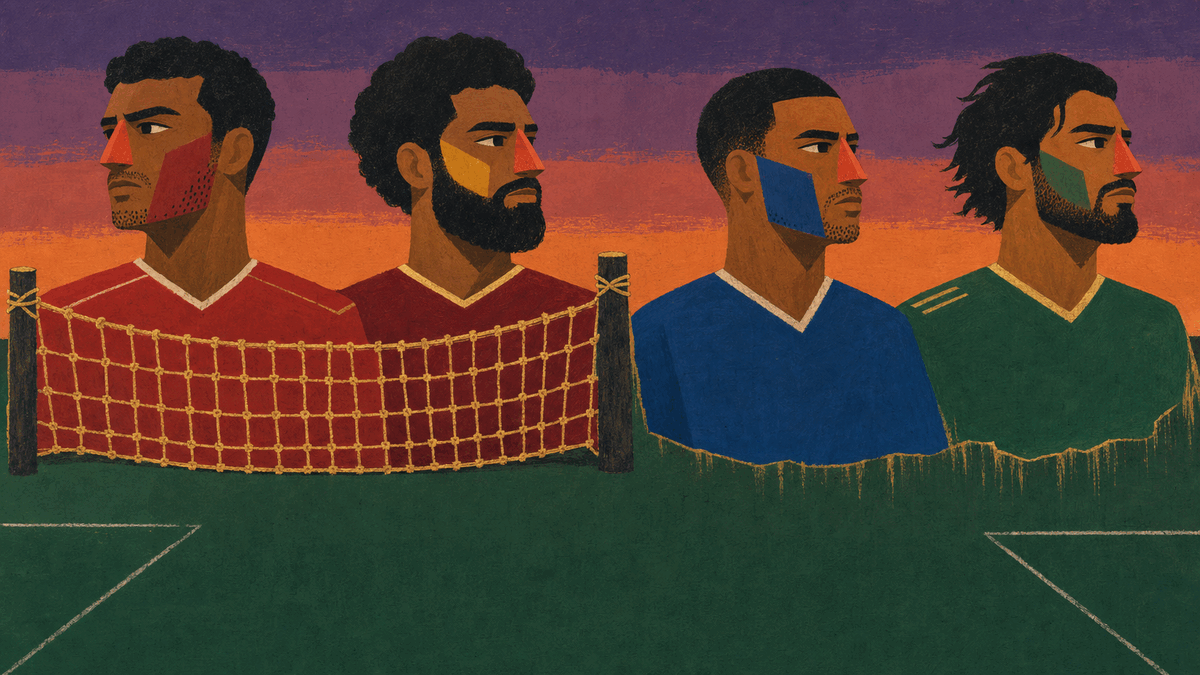
Euro 2028 is being played across the United Kingdom and the Republic of Ireland, from 9 June to 9 July 2028, with the final at Wembley. Four nations are hosting it: England, Scotland, Wales and the Republic of Ireland. None of the four has a place in it. All four enter qualifying with everybody else, and only two places are held back to catch the ones who fall short.
Most people hear “two reserved places” and picture a lottery, a scramble between whichever hosts stumble. It is nothing of the sort. The two places go to the two best-ranked hosts who have not already qualified, and once you write that rule out carefully something odd falls out of it: the top two hosts in the ranking cannot miss. Not rarely. Never. It is a fact about the rule, not a forecast.
The hosts are not seeded into their own tournament
Start with the format, because the whole thing turns on it. UEFA has 55 members and Russia is suspended, so the model works with 54 entrants. They are drawn into 12 qualifying groups of four or five, with the four hosts kept apart so no group contains two of them. Home and away, three points for a win.
The 12 group winners and the 8 best runners-up go through directly. That is 20 places of the 24. Two more are reserved for the two best-ranked hosts who did not make those 20. Whatever is left, two places if both reserved slots are used, four if neither is, goes to play-offs between the leftover runners-up and the best-ranked 2026-27 Nations League group winners who have not already qualified.
Sky Sports put the consequence in one line: “If at least two of England, Scotland, Wales and the Republic of Ireland qualify, then all four nations will appear in the tournament.” That is true, and it is the friendly half of the story. The other half is what happens when fewer than two qualify, and who is exposed when it does. The qualification system was approved by UEFA’s Executive Committee and is set out on uefa.com. The qualifying draw is on 6 December 2026.
Two places, strictly ordered
Rank the four hosts, first to fourth, on whatever ranking is used to decide the reserved places. Now play the campaign out and ask who ends up in the queue for those two places. The queue is defined as “hosts who have not already qualified, best-ranked first”, which means it is ordered before anybody kicks a ball.
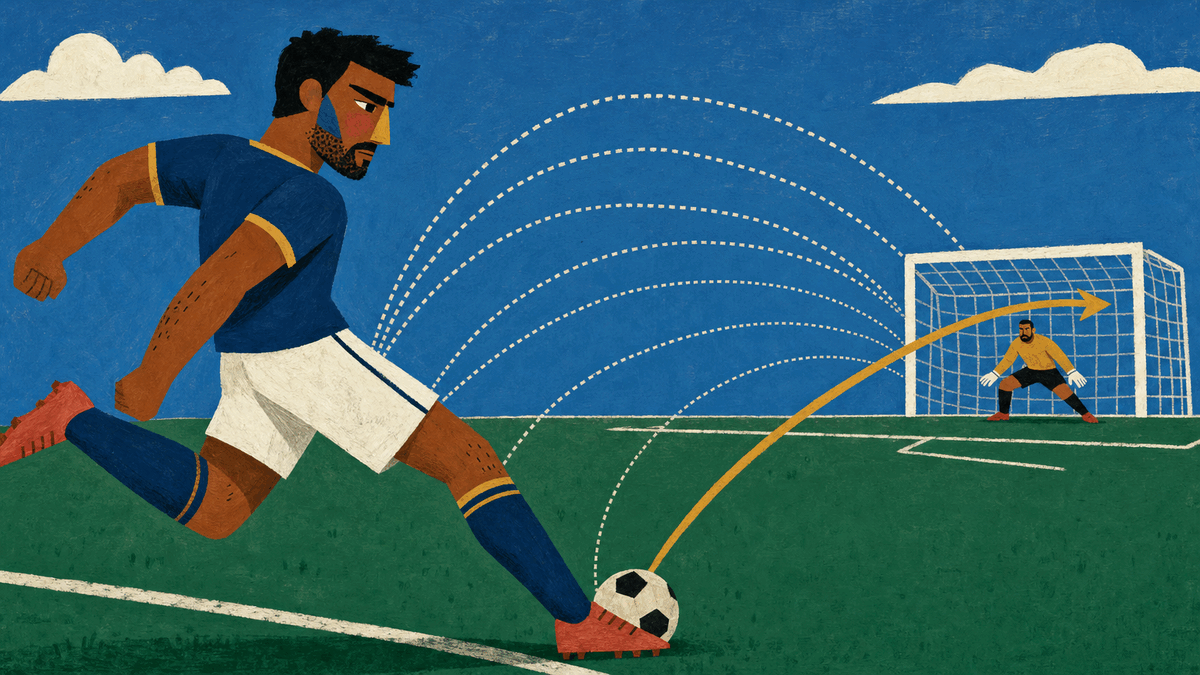
If the top-ranked host fails to qualify on merit, it joins that queue at the front, by definition: there is nobody above it. It takes a reserved place every time. The second-ranked host can have at most one nation ahead of it in the queue, the top-ranked one, so at worst it is second. There are two places. It is covered too. The third and fourth ranked hosts are the only ones who can find themselves third or fourth in a queue with two places in it.
The net is not a lottery. It is a queue, and the first two places in it are spoken for before a ball is kicked.
You can see the same thing from the other side. For a host to miss, at least three hosts have to fail to qualify on merit, and the missing one has to be below two of the others in the ranking. That is the only shape the failure can take. It is why the Sky Sports line is worth reading twice: two hosts going through does not just help the other two, it guarantees them.
100,000 campaigns, and two hard zeros
The argument above is arithmetic, so it does not need a simulation. What the simulation adds is the size of the risk for the two hosts who are actually exposed. Our Euro 2028 qualifying model runs the whole thing end to end, 100,000 times, at its default strength prior. Crucially it does not assume a draw: the groups do not exist until December 2026, so every campaign draws a fresh set from the pots and draw luck ends up inside the numbers rather than hidden behind one invented bracket.
- Englandin 100.0%on merit 91.5%reserved place 5.9%play-off 2.6%
- Walesin 100.0%on merit 59.0%reserved place 35.1%play-off 5.9%
- Scotlandin 99.1% · misses 0.9%on merit 55.8%reserved place 36.8%play-off 6.5%
- Irelandin 93.2% · misses 6.8%on merit 47.0%reserved place 37.1%play-off 9.1%
Touchline’s Euro 2028 qualifying model at its default strength prior. The draw is not assumed: every campaign draws a fresh set of groups from the pots.
England and Wales come out at 100.0% in, and that is a hard zero rather than a rounded one: not a single campaign in 100,000 left either of them out. Scotland missed 0.9% of the time and the Republic of Ireland 6.8%. Notice how much work the net does even for the teams that never need saving: Wales qualified on merit 59.0% of the time and took a reserved place in another 35.1%.
Two joint numbers are worth keeping. Fewer than two hosts came through on merit in 11.8% of campaigns, which is how often the net gets stretched at all. And at least one host was absent from a tournament in its own country in 7.4%, roughly one campaign in fourteen. Small, and a long way from impossible.
The order is a prior, not a fact
Here is the part that needs saying plainly, because the finding is easy to over-read. The ranking used above, England first, then Wales, then Scotland, then the Republic of Ireland, is our model’s own strength prior, a tiered log-goals rating we set by hand. It is not a published UEFA ranking, and it is not a claim about who is better. The reserved places will be settled by whatever ranking UEFA specifies, applied to results that have not been played.
So we are not telling you Wales are better than Scotland. Swap those two in the order and the numbers swap with them: the zeros move to different names, and there are still exactly two of them. Which two hosts are safe is genuinely uncertain and worth arguing about. That two of them are safe is not.
That is the distinction the model is built to make. The structure survives any plausible reordering; the labels do not survive much at all. If you think the order is wrong, the useful response is not to distrust the finding, it is to change the order and see how far the exposure moves.
Where the risk actually sits
On our prior, the Republic of Ireland carries almost all of it. They qualified on merit 47.0% of the time, took a reserved place in 37.1%, came through the play-offs in 9.1%, and were absent in 6.8%. Being the fourth-ranked host is the exposed seat, and it is exposed in a specific way: the play-off column is where the real jeopardy lands, because that is the route you take once the net has already been used up.
Scotland, third in the order, sit almost on the line. A 0.9% miss rate is the price of being one place outside the guarantee. Move them up one and it becomes zero. That cliff-edge, a rank order turning into a hard guarantee rather than a gradient, is the genuinely strange thing about this format, and it is not obvious from reading the rules once.
Go and move the numbers yourself
The model is on the Euro 2028 page, with every host’s strength on a slider. Drag one and watch what happens. The individual percentages move, sometimes a lot. The count of hosts who cannot miss does not. It is two, every time, because it was never really about how good anybody is.
If you want the machinery behind it, the engine is the same seeded Monte Carlo approach we use everywhere, written up in Monte Carlo from scratch, and the way we pick the inputs is in how we set the numbers.
In this piece