48 teams
Did the 48-team World Cup actually work?
As an access project, the expansion was an emphatic success: four debutants, nine of ten African teams into the last 32. As a competition, the group stage looked more lopsided, and every team paid for it in air miles. Two answers to one question.
22 July 2026 · 8 min read · James Frewin
The first 48-team World Cup is done, Spain are champions, and the argument that ran for a decade before a ball was kicked can finally be settled with something other than a hunch. Was expanding from 32 teams to 48, from 64 matches to 104, a good idea? The honest answer is that it depends which question you are asking, because the tournament passed one test emphatically and struggled with another.
Four debutants (Curaçao the smallest nation ever to qualify); Africa's places up from 5 to 9, with 9 of 10 African teams reaching the last 32.
First-week scoring rose to 3.12 goals a game (2.56 in 2022) and one analysis put the group-stage winning margin at its highest since 1982, both consistent with a wider quality gap. Thin, single-source data: directional, not settled.
Group-stage travel averaged about 5,146 miles per team across three countries, with up to a tenfold gap between nations. Qatar 2022 was near-zero by comparison.
As an access project, it plainly worked
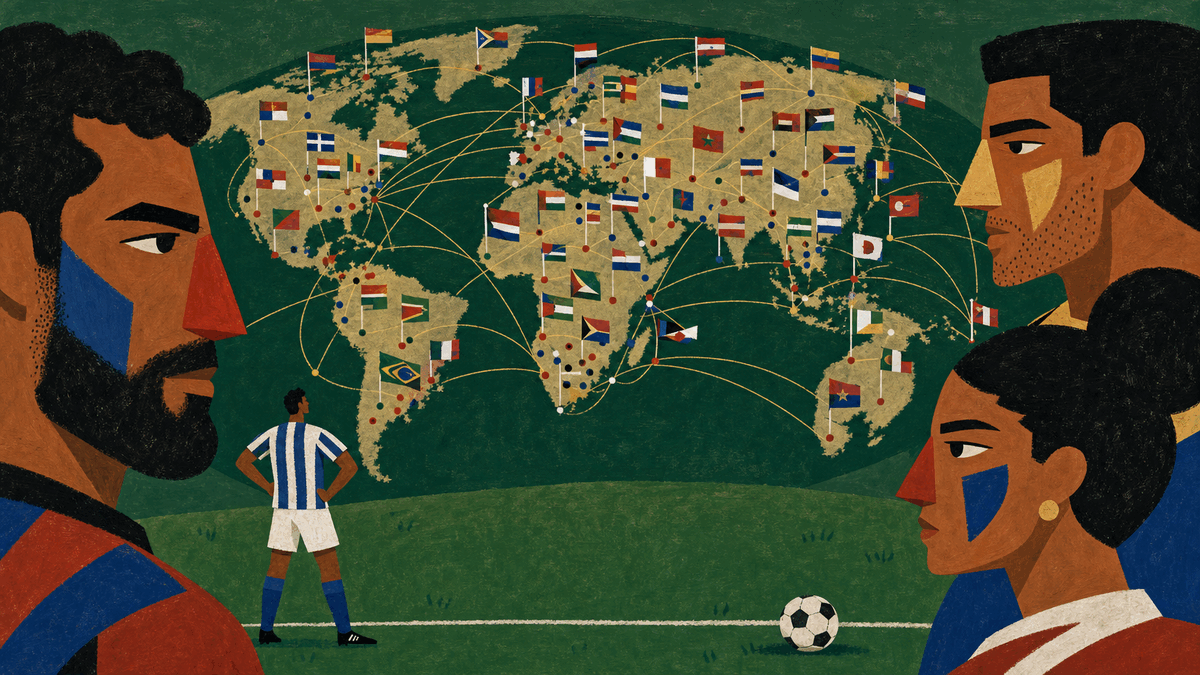
Judge the expansion by who got to play, and it is a clear success. Four nations made their World Cup debut, Cape Verde, Curaçao, Jordan and Uzbekistan, with Curaçao (population around 156,000) the smallest country ever to reach a men’s finals. Africa’s allocation rose from five places to nine, and nine of those ten African teams went through to the round of 32, a continent’s best-ever showing by a distance. This was the entire stated point of expansion: more nations, more first-timers, a genuinely global tournament. On that promise FIFA delivered.
As a competition, the jury is still out
Judge it by the quality of the football and it gets murkier. More lower-ranked teams means a wider gap between the best and the rest, and the early signal fits: scoring in the first week ran at 3.12 goals a game, up from 2.56 in 2022 and 2.38 in 2018, and one analysis put the group-stage average winning margin at its highest since 1982. Both are what you would expect if the extra sixteen teams were, on average, easier to beat.
Two honest caveats keep this from being a verdict. First, those competitiveness numbers come from single, lower-authority sources, so they are a direction of travel, not a fact to bank. Second, the counter-evidence cuts the other way: if nine of ten African sides reached the knockouts, either the field was more competitive than the “dilution” story allows, or qualifying got too easy, and which of those you believe depends on your priors. The one place the goals question is genuinely answered is the total, and we covered why 308 goals is mostly arithmetic elsewhere.
The cost is measured in air miles
The cleanest complaint has nothing to do with goals. Spreading 48 teams across three enormous countries meant travel unlike any recent World Cup: group-stage journeys averaged about 5,146 miles per team, with some nations covering ten times as far as others, against a Qatar 2022 where every stadium was within driving distance. Players and coaches complained less about distance than about its side effects, heat, pitches and disrupted rhythm. That is the price of a three-country, 48-team tournament, and it is a real one, paid in recovery time and legs.
Every extra team is a nation included and a few more miles flown. The expansion is generous and bloated at the same time, and both are true for the same reason.
A design risk worth naming
The format also builds in a subtler problem. With eight of the twelve third-placed teams advancing, finishing third in your group is often enough, which lowers the stakes of the final group game and, in theory, invites two teams who both know a certain result sends them through to play out something convenient. This is a design risk, not a measured 2026 outcome, the published examples of it are hypothetical, so the fair way to put it is that the format makes dead rubbers more likely, not that it produced a specific number of them.
History says take a breath
Before declaring the game ruined, remember it has done this before. The World Cup went from 16 teams to 24 in 1982 and from 24 to 32 in 1998, each time amid the same fears of dilution, and by at least one account the 1998 expansion actually tightenedaverage winning margins rather than widening them. Expansion is not automatically fatal to competitiveness. Whether 2026’s early lopsidedness is the new normal or just a first-tournament wrinkle is exactly the thing another cycle will tell us, and nothing before it can.
The verdict, and why it will not matter
So: a strong pass on inclusion, an open question on competition, a clear cost in logistics. A reasonable person could weigh those and land on “worth it” or “not yet.” It is also close to moot. The extra 40 matches helped FIFA project roughly $9 billion for the cycle, and the president has already floated 64 teams for 2030. The format was never going to be judged only on the football, and this time the football gave the sceptics less ammunition than they expected and the accountants everything they wanted.