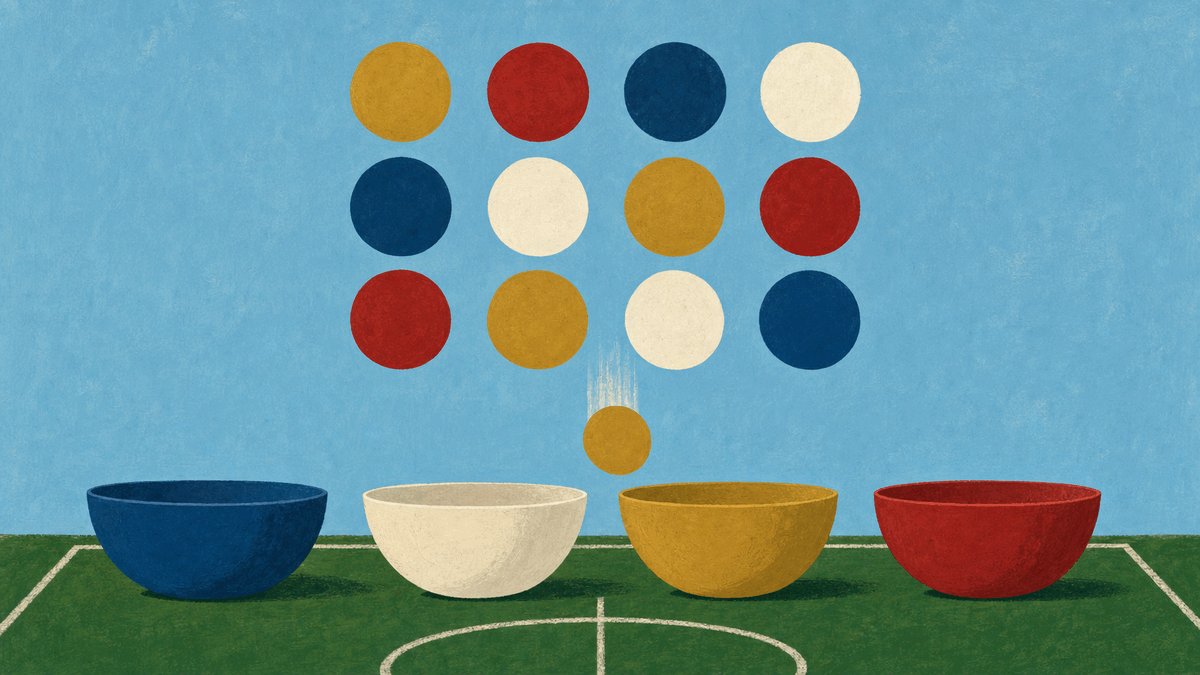
two rating families
Elo vs xG: two ways to rate a football team
One rates you by who you beat, the other by the chances you create. They usually agree, and the teams they argue about are the most interesting in football. A plain guide to both, and to the gap.
21 July 2026 · 6 min read · James Frewin
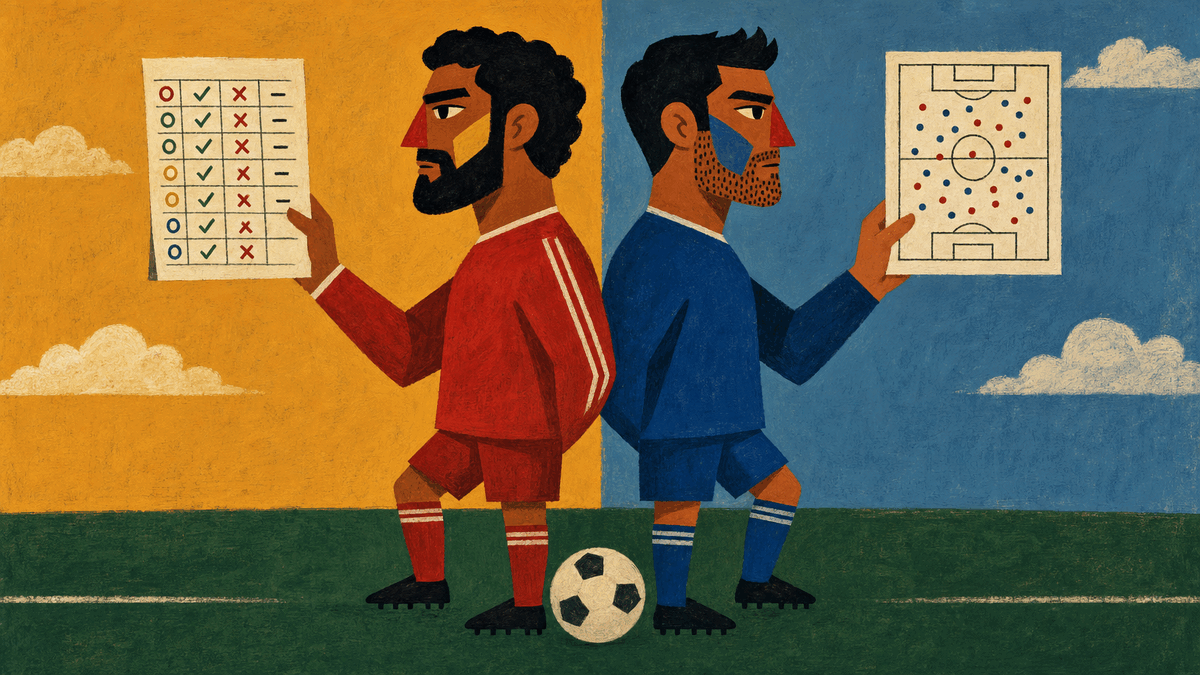
“How good is this team, actually?” is the load-bearing question under every prediction, and football has two serious families of answer. One, Elo, rates you by who you beat. The other, xG, rates you by the chances you create. They usually agree. When they argue, pay attention: the argument is where the information is.
Elo: results are the only truth
Elo began as a chess rating, built by the physicist Arpad Elo, and it transplants to football almost unchanged; it is the backbone of the long-running world football rankings and the club ratings many analysts lean on, and FIFA’s own rankings moved to an Elo-style method in 2018. The mechanism is one elegant loop. Every team carries a number. When two teams play, the result transfers points from one to the other, and the size of the transfer is set by surprise: beat a much stronger side and you take a lot, beat a minnow and you take almost nothing. Fail to win a game the ratings said you should, and the points flow out.
The elegance is that the system never needs to watch a match. Its weakness is the same sentence. A 1–0 scraped with two shots and a 4–0 dismantling are the same entry in the ledger; a summer of transfers is invisible until the results arrive; a lucky month reads as improvement. Elo is a slow, honest historian, and history is all it knows.
xG: chances are the only truth
The expected-goals family starts from the opposite conviction: results are noisy, process repeats. Value every shot by how often that kind of chance is scored, add them up, and rate each team’s attack and defence by what they keep creating and conceding rather than by what happened to go in. A team that dominates and loses gets credit; a team nicking wins off two counters a game gets suspicion.
That makes xG ratings quicker to see through a false table, and quicker to spot decline behind a winning run. But shot maps are not the whole of football. They struggle with elite finishing that persists, with game state (a team 2–0 up stops needing to create), and with sides built to concede territory on purpose. xG is a sharp critic that never checks the scoreboard, and sometimes the scoreboard was the point.
Elo: rate the results
- Currency: match results, weighted by surprise
- Sees: who actually took the points
- Fast to trust: a giant-killing moves it at once
- Blind to: how the game looked, squad changes, a lucky run
xG: rate the chances
- Currency: quality of chances created and conceded
- Sees: the process that repeats week to week
- Fast to trust: a dominant defeat still counts as dominance
- Blind to: elite finishing, game state, a team defending a lead
The disagreements are the product
Run both ratings over a league and most teams land in the same place; results and performances usually rhyme. The value is in the residue. When Elo rates a team clearly higher than xG does, that team has been converting thin dominance into points, and the polite word for that is unsustainable. When xG rates a team higher, it has been playing better than its table position, and the market is often late to it. Neither signal is certain; both are worth more than either rating alone, which is why two honest models disagreeing is a feature of the landscape, not a flaw in it.
Elo tells you what a team has earned. xG tells you what it deserves. Forecasting lives in the gap.
Where Touchline sits
Touchline’s engine is not an Elo system; it belongs to the chances family. Each match is priced as a pair of goal rates, anchored to underlying performance and to the consensus of forecasts, then simulated a hundred thousand times. But the rates themselves respect the Elo lesson: results, and the market prices that digest them, keep the chances honest. Use either family alone and you inherit its blind spot. Use both and you at least know where you cannot see.