the bounce
The manager bounce is mostly noise
A new manager, a fresh start, an early win. It feels like cause and effect. Most of the time it is a team that was better than its results reverting to the mean.
9 July 2026 · 5 min read · James Frewin
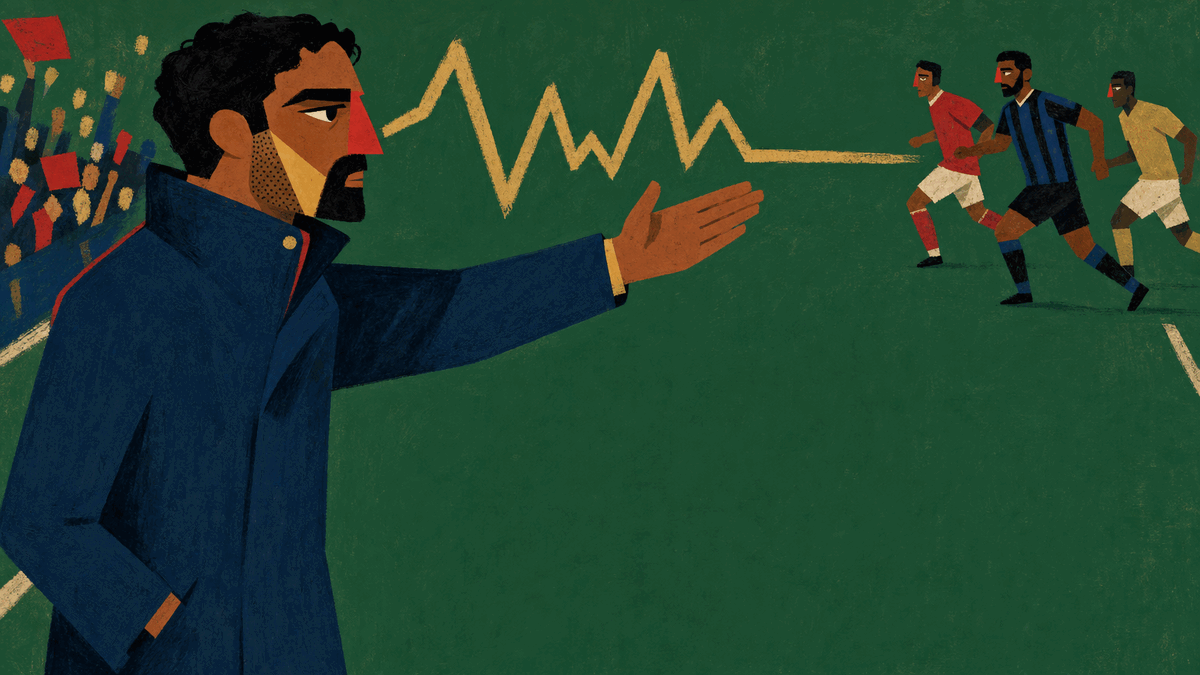
A club sacks its manager in November, sitting a point above the drop. The new man walks in, wins his first game, and the story writes itself: fresh voice, tighter shape, players who suddenly look like they care again. The new-manager bounce is one of football’s most repeated ideas, and it is real in the narrow sense that results often do pick up. What it usually is not is proof that the manager caused it.
The bounce is real, the cause is not
Studies of managerial changes tend to find the same shape. Teams that sack a manager are, on average, doing worse than they should be, and their results improve afterwards. The trap is the word afterwards. When researchers line up a set of clubs that were in a similar hole but kept their manager, those clubs tend to recover too, by a strikingly similar amount. In other words, the lift mostly shows up whether or not anyone gets replaced. The sacking gets the credit for a recovery that was largely coming anyway.
Bad variance looks a lot like a broken team
Football is a low-scoring game, which means luck has plenty of room to work. A side can play well, hit the post twice, concede a deflection, and lose. Do that four weekends running and the table says crisis. The underlying performance, the shots, the chances created, the expected goals, often says something milder: a decent team on a bad run.
That gap is the whole story. A struggling team is usually better than its recent results, and a team that is better than its results tends to drift back toward its true level on its own. That drift is mean reversion. It does not read a team-talk, it does not know the manager’s name, and it would happen to a similar side that changed nothing at all. Dressed in a new tracksuit and a first-week win, it looks exactly like a coaching miracle.
The new manager inherits a team that was probably going to get better anyway, and gets to keep the credit.
The after bar starts a little higher, and the eye calls it a turnaround. Both bars sit inside the same noise band. Account for the fact that a struggling team was probably better than its run, and most of the gain flattens away.
What the model does with a new name
This is why Touchline does not hand a new manager a bonus. When someone arrives, the honest move is not to bank a lift, it is to admit you know less than usual. Take Andoni Iraola’s first competitive match in charge of Liverpool, away at Newcastle on the opening weekend. There is no settled pattern to lean on yet: no games under him with this squad, a summer of change, a set of ideas that may take weeks to show up on the grass. The model treats that first game as closer to a coin toss than a bounce, widening the range of outcomes rather than nudging the number toward a story.
A wider, honest read beats a narrow, confident, wrong one. If Iraola’s Liverpool click straight away, the results will say so and the model will move with them. Until there is evidence, banking a bounce that the research says is mostly mean reversion would be the same mistake the bounce narrative makes, only with maths pointed at it.
How to read the first month
Watch the performances, not the results, and give them time. A new manager who is genuinely changing something shows it in the shape of games before it shows in the points: more chances, fewer conceded, a team that stops losing the run of play. If the only evidence is a first-weekend win over a side the club was roughly level with anyway, hold your applause. That is the part the table cannot tell you apart from luck.
Iraola’s Liverpool, day one
Newcastle v Liverpool, opening weekend. See how the model prices a manager’s day one.