the receipts
The prediction scam, and the opposite of it
A viral post claims someone called the exact 2026 World Cup final years ago. It is a scam with a name. Here is how it works, and why Touchline is built to be its opposite.
17 July 2026 · 5 min read · James Frewin
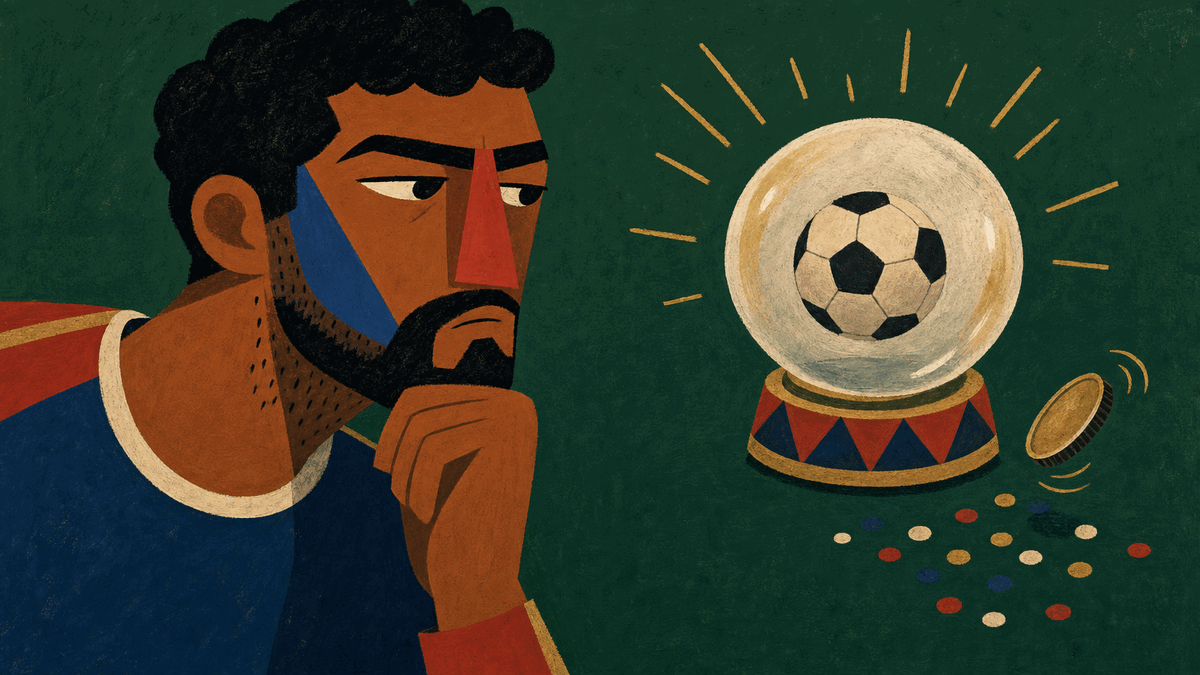
A post went viral in the week of the final. An account surfaced a tweet, stamped years ago, that called the exact 2026 World Cup final: “Argentina just beat Spain at the 2026 World Cup final, 3-2.” Posted in 2021. Tens of thousands of people saw it and asked the obvious question: how did he know?
He didn’t. It is a scam with a name, survivorship bias, and it runs the same way before every big final. It is worth understanding, because Touchline models that exact fixture, and we are built to be its opposite.
How the scam works
- 1
Post every outcome
From a locked, anonymous account, the scammer posts one tweet for every plausible scoreline and matchup. France beats Portugal 4–2. Brazil beats Spain 3–1. Dozens or hundreds of them. Nobody can see them yet.
- 2
Delete the misses
When the real result lands, they delete every tweet that got it wrong. What is left is the handful that happened to be exactly right.
- 3
Go viral
They unlock the account and push the survivors during the final, when everyone is watching. A screenshot of a perfect call is the kind of thing people love to share, precisely because it looks impossible.
- 4
Turn attention into money
Monetised views are the small money. The attention is the setup for what comes next.
- 5
Sell the system
They sell a betting course or a paid prediction group, around fifty dollars a month. Millions just watched them call a World Cup final, so some will pay to learn how. A few months of that runs into six figures, all off a record that was faked from the first post.
Post every outcome. Delete the misses. Sell the survivors.
Why it fools us
You only ever see the survivor. The hundreds of wrong guesses were deleted before you arrived, so the one that hit looks like foresight instead of what it is: a lottery ticket shown to you after the draw. It is the same trick as a stock tipster who mails half their list “it goes up” and half “it goes down,” then only ever talks to the half they got right.
Nobody predicts exact scorelines years ahead. Nobody predicts them minutes ahead. The honest unit is a probability across many outcomes, and honest work shows all of them, including the misses.
How Touchline is different
Touchline is a model, not a tip. It is designed so you never have to take our word for it, because the opposite of a deleted track record is one you can check.
What honest prediction looks like
On the World Cup final page you can run the model yourself, move the assumptions, and watch the numbers shift. The full method, from research to the seeded engine to the receipts, is written up in how it works. When a match ends, the model’s number stays on the page next to the real result, right or wrong.
See the model, not a screenshot
Spain v Argentina, the final, modelled and live.