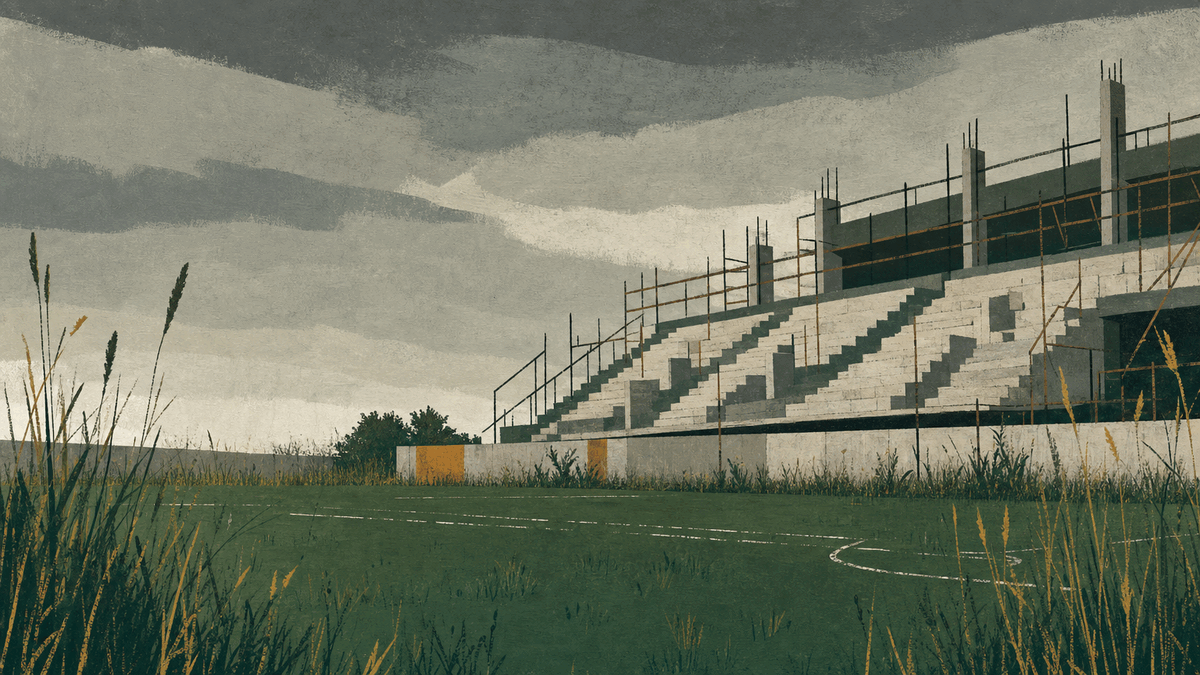
the final
The final, read two ways: Spain's control, Argentina's late
Spain have the best defence of the tournament and the freshest legs. Argentina have sealed four straight knockout wins in stoppage time. The model, and the argument, sit right on that fault line.
17 July 2026 · 6 min read · James Frewin

The 2026 World Cup final sits on one fault line, and both teams stand on opposite sides of it. Spain have controlled every game they have played. Argentina have won the ones that mattered in the last kick. Sunday at MetLife decides which of those is the better way to win a final. This site’s model, run 100,000 times, comes down narrowly on one side, and it is worth showing the work.
Spain, the case for control
Spain arrive with the best defence of the tournament: one goal conceded in seven games. Unai Simón held a record World Cup shutout streak of 650 minutes before it broke in the quarters. The route was the most controlled in the field, and the semi-final was a 2–0 masterclass against France. They have not played a single minute of extra time, and they take a full day’s extra rest into the final. That is the freshest set of legs left in the competition.
The spine is Rodri, whose reading of danger is the best in the world and who lets de la Fuente run the game through the ball. When Spain keep 60% of it, the opponent chases in the heat and the chances come late from substitutes: Merino has already scored two knockout winners off the bench, at 90+1′ against Portugal and 88′ against Belgium. The model has Spain 1–0 as the single most likely scoreline. Control, then a late goal, is the Spanish script.
Argentina, the case for the last minute
Argentina’s case is simpler and harder to model. They have sealed all four of their knockout wins at 90+2′ or later. They came from 2–0 down against Egypt, went the distance twice, and beat England 2–1 with two goals after the 85th minute. Whatever you call it, the pattern has held for a month.
Messi is 39 and top of the scorer chart with eight goals here, 21 across his World Cups, a record. The model cannot unsee that, and still has him leading the final’s scorers even against Spain. Behind him, Emiliano Martínez has already won a World Cup on penalties, so a final that reaches a shootout tilts Argentina’s way. Scaloni does not gamble by riding a game to the 80th and emptying the bench. For this side it is the system.
Spain win the 90 minutes on paper. Argentina win the minutes nobody schedules.
Why the model sits under the market
Here is the number that matters. The model makes Spain 55.5% to lift the trophy, Argentina 44.5%. That sits four points under Opta’s 59.6% and the market’s roughly 59.9%, now clustered tight together. The site is the lowest Spain price of the lot, and that is a choice, not an accident.
This site sits at 55.5, under Opta and both markets. That gap is on purpose: it takes Argentina’s stoppage-time habit seriously.
Four straight knockout wins sealed in stoppage time reads, to this model, as a repeatable skill in game-management rather than a run of luck that has to end on Sunday. Take Argentina’s lateness seriously and the favourite’s price comes down. That is the whole gap. Swing the assumptions and Spain’s number moves 33 points: a repeat of the France masterclass puts them at 70%, the stoppage-time script one more time drops them to 37%. Opta and both markets cluster between 59 and 60. This site sits just below all of them, on purpose.
How to watch it
The tell is on the clock. Spain have struggled to turn control into early goals all tournament, winning 1–0, 2–1, with goals at 88′ and 90+1′. Against most teams that is fine. Against a side that has sealed four straight knockouts in second-half stoppage time, the one thing Spain cannot afford is to be level at 85′. If Spain lead going into the last ten minutes, control has held. If it is level, the game is on Argentina’s terms, and the model knows it.
Run the final yourself
Move the assumptions, watch the 55.5 shift, see the most likely scores.
In this piece